

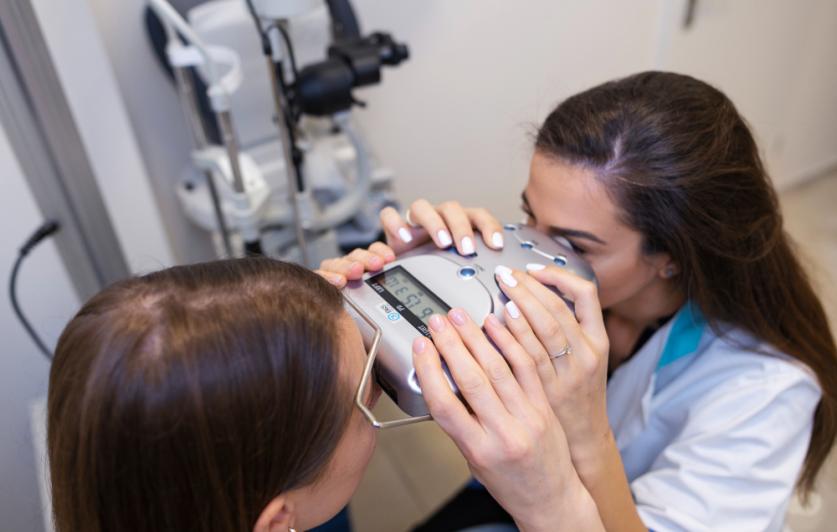
LASIK (Laser-Assisted In Situ Keratomileusis) is a refractive procedure in which a thin corneal flap is created and an excimer laser reshapes the underlying cornea to correct myopia, hyperopia, and astigmatism. Performed under topical anesthesia, the procedure typically takes minutes per eye, with rapid visual recovery.
Symptoms / Indications
- Dependence on spectacles or contact lenses
- Intolerance or discomfort with contact lens wear
- Active lifestyle limited by eyewear
- Stable refractive error for at least one year
- Desire for spectacle independence
Benefits
- Rapid visual recovery, often within 24 hours
- High predictability and safety profile
- Minimally invasive, performed under topical anesthesia
- Long-term stable refractive outcomes in suitable candidates
- Significant improvement in quality of life and convenience
Frequently Asked Questions
Q: Who is suitable for LASIK?
A: Candidates are typically aged 18 and above with stable refraction, adequate corneal thickness, healthy ocular surface, and absence of certain medical conditions.
Q: Is LASIK painful?
A: No. The procedure is performed under anesthetic drops. Patients may feel mild pressure but no pain. Mild irritation is common for a few hours afterward.
Q: Will I need glasses again after LASIK?
A: Most patients achieve excellent unaided distance vision. However, age-related presbyopia after 40 may eventually require reading glasses.